pumps

Heat exchange

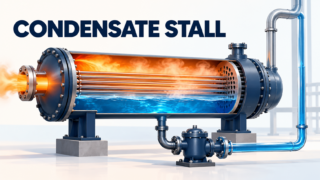
Condensate Stall: Why Steam Heat Exchangers Need More Than a Bigger Trap

A steam-heated exchanger transfers heat as steam condenses on its heating surfaces. A modulating steam valve adjusts the heat input to maintain the required process outlet temperature. At lower demand, the valve can reduce steam-space pressure. For saturated steam, lower pressure also means lower saturation temperature.
Process/Chemical process

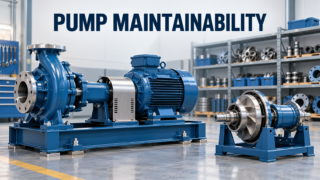
Pump Maintainability: How to Specify Spare Parts, Interchangeability and Replacement Access

Tennessee's new ITT Goulds Pumps plant will generate 57 jobs and enhance inventory capacity. Engineers must focus on maintenance access and spare-part compatibility to ensure efficient system return to service.
Process/Chemical process

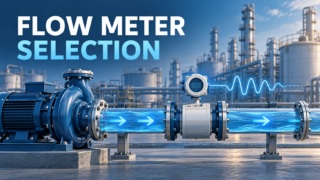
Flow Meter Selection for Pump Systems: Why Installation Matters as Much as Accuracy

Effective pump design involves selecting the right pump and using dependable flow measurement to confirm its operation. Engineers should consider factors like liquid conductivity, viscosity, and pressure-loss allowance to ensure accurate field data. This approach enhances system reliability and performance.
Process/Chemical process

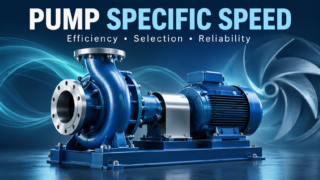
Pump Specific Speed Explained: How to Compare Efficiency and Select the Right Pump

Engineers must consider specific speed, efficiency, and other factors when selecting pumps for their processes.
Heat exchange

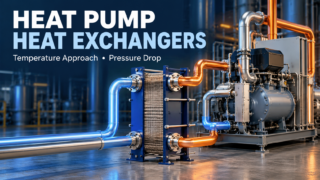
Heat Exchanger Selection for Industrial Heat Pumps: Temperature Approach, Pressure Drop and Part-Load Performance

For process engineers, evaluating heat exchangers alongside compressors and operating conditions is essential to ensure the complete heat pump system performs well.
piping

Mechanical Seal vs Gland Packing: Differences, Advantages, Disadvantages, and Selection Guide

Mechanical seals and gland packing are essential for preventing fluid leakage in industrial pumps and rotating equipment. Mechanical seals, with their precision-machined faces, offer superior sealing performance and low maintenance requirements, making them ideal for hazardous and high-pressure applications. In contrast, gland packing, with its simple construction and ability to handle dirty or abrasive fluids, is favored for its cost-effectiveness and versatility.
pumps

What Is Secondary Alignment? Machine Alignment After Installation

IntroductionSecondary alignment is a precision adjustment process performed after machinery such as pumps, compressors, ...
Process/Chemical process

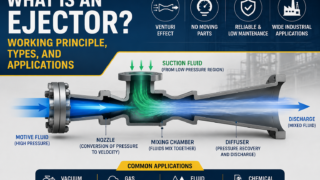
What Is an Ejector? Working Principle, Types, and Applications

Learn what an ejector is, its working principle, types, advantages, and industrial applications in vacuum, gas handling, and fluid mixing
pumps

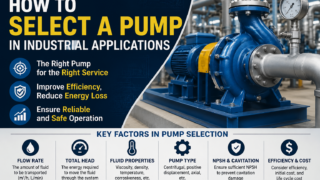
How to Select a Pump in Industrial Applications

IntroductionSelecting the right pump is critical for ensuring efficient and reliable operation in industrial plants. Inc...
pumps

Pump Troubleshooting: Common Problems and Solutions

IntroductionPump failures can cause major plant downtime. Understanding common problems helps in quick troubleshooting.C...