Short Answer
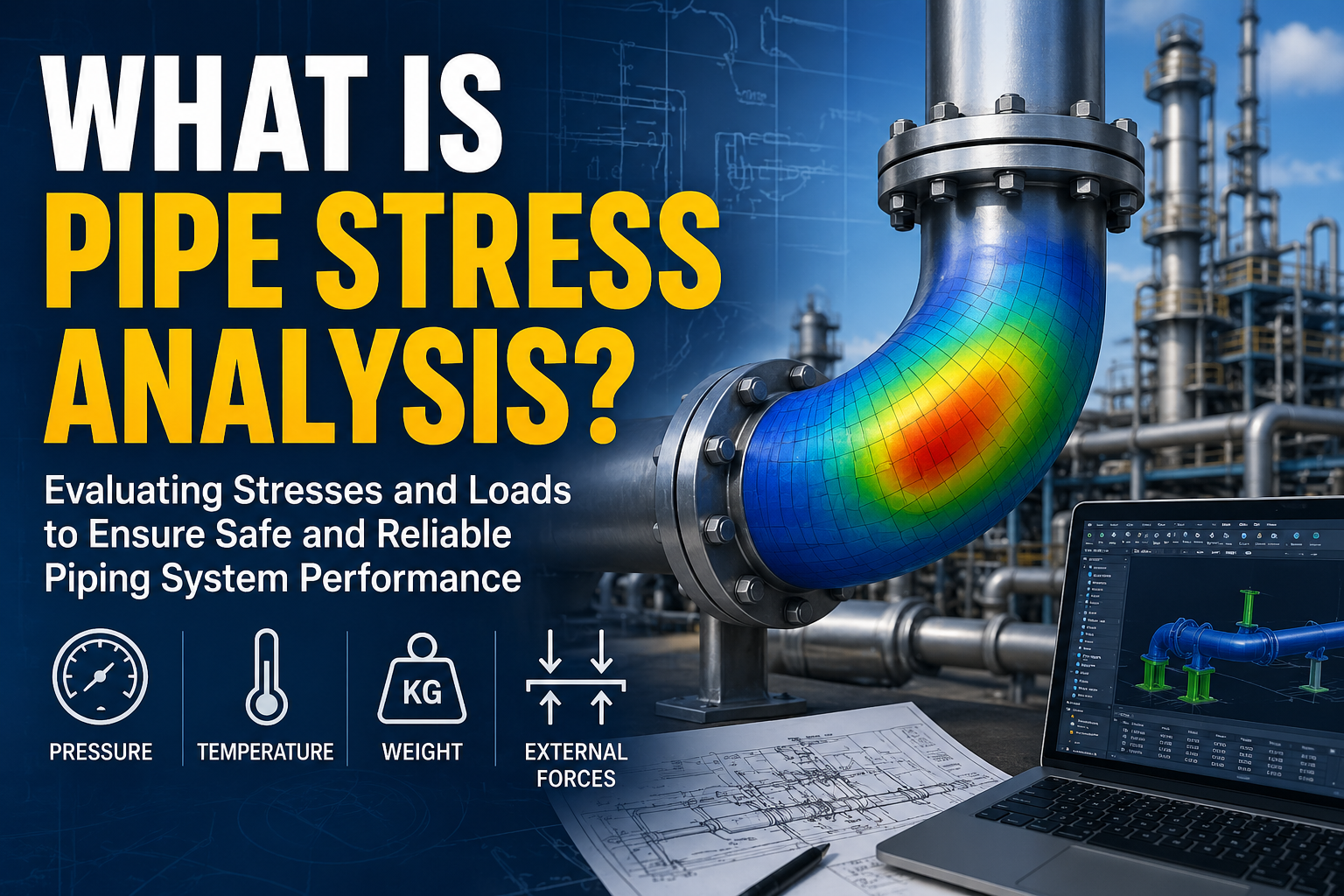
Pipe stress analysis is an engineering method used to evaluate the stresses and loads acting on piping systems. It ensures that pipes can safely withstand pressure, temperature changes, weight, and external forces during operation.
Explanation
In industrial plants, piping systems are subjected to various forces such as internal pressure, thermal expansion, weight of the pipe and fluid, and external loads. These forces can cause stress, deformation, or vibration in the piping system.
Pipe stress analysis is performed to ensure that the piping system operates safely under these conditions. Engineers analyze the stress levels in the pipes, supports, and connected equipment to verify that they remain within allowable limits defined by design codes.
Specialized software and engineering calculations are often used to evaluate stresses and movements in complex piping networks.
Engineering Practice
In real plant engineering projects, pipe stress analysis is typically required in the following situations:
- High temperature piping systems
- Long piping runs with thermal expansion
- Piping connected to rotating equipment such as pumps and compressors
- High pressure piping systems
Proper stress analysis helps prevent problems such as excessive pipe movement, equipment nozzle overload, and pipe fatigue.
Related Questions
What is a pipe support?
Why are expansion loops used in piping?
What is thermal expansion in piping systems?
Summary
Pipe stress analysis is an important engineering process used to ensure the safety and reliability of piping systems. By evaluating loads, movements, and stresses in pipes, engineers can design piping systems that operate safely under various operating conditions.
コメント