Introduction
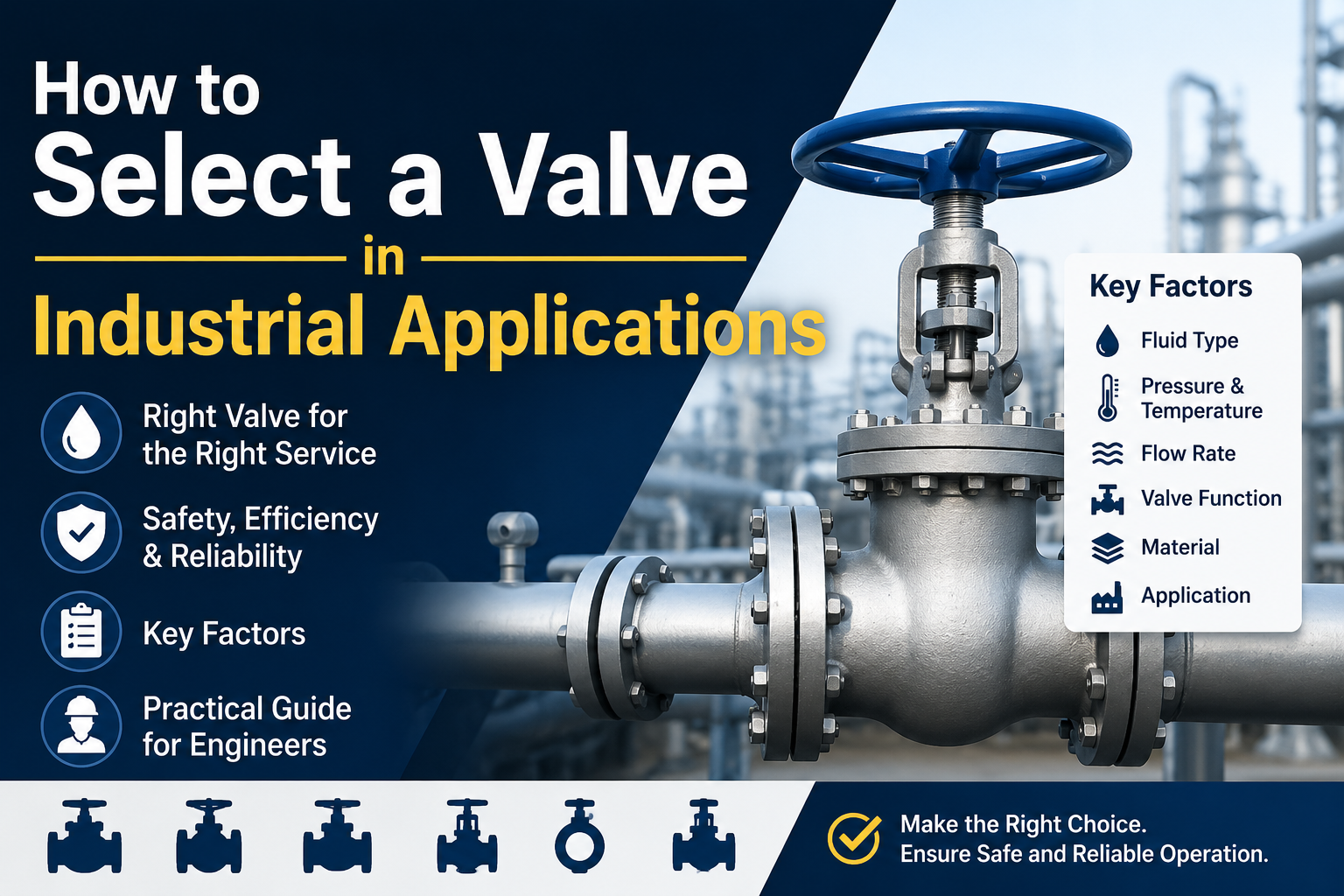
Valve selection is critical for ensuring safe and efficient operation in industrial piping systems. Choosing the wrong valve can lead to leakage, pressure loss, and operational issues.
What Is Valve Selection?
Valve selection is the process of choosing the most suitable valve type, size, and material based on system requirements such as pressure, temperature, and fluid characteristics.
Key Factors in Valve Selection
Fluid Type
The type of fluid determines the valve material and design:
Liquid
Gas
Steam
Corrosive fluids
Pressure and Temperature
Valves must be selected based on operating pressure and temperature conditions to ensure safety and durability.
Flow Control Requirements
Consider whether the valve is used for:
On/off control
Flow regulation
Pressure control
Valve Size
The valve size must match the pipe size and required flow capacity.
Material Selection
Material must be compatible with the fluid:
Carbon steel
Stainless steel
Alloy materials
Types of Valves and Their Applications
Globe Valve
Used for flow control and throttling applications.
Gate Valve
Used for full open or full close operations with minimal pressure loss.
Ball Valve
Suitable for quick shut-off and tight sealing.
Check Valve
Prevents backflow in piping systems.
Valve Selection Procedure
- Define system requirements
- Identify fluid properties
- Select valve function (on/off or control)
- Choose valve type
- Determine size and rating
- Verify material compatibility
Common Mistakes in Valve Selection
Selecting the wrong valve type
Ignoring pressure and temperature limits
Using incompatible materials
Oversizing or undersizing
Related Topics
For understanding valve basics:
- What Is a Valve?
- What Is a Globe Valve?
For system design:
Conclusion
Proper valve selection improves system performance, safety, and reliability in industrial applications.