Introduction
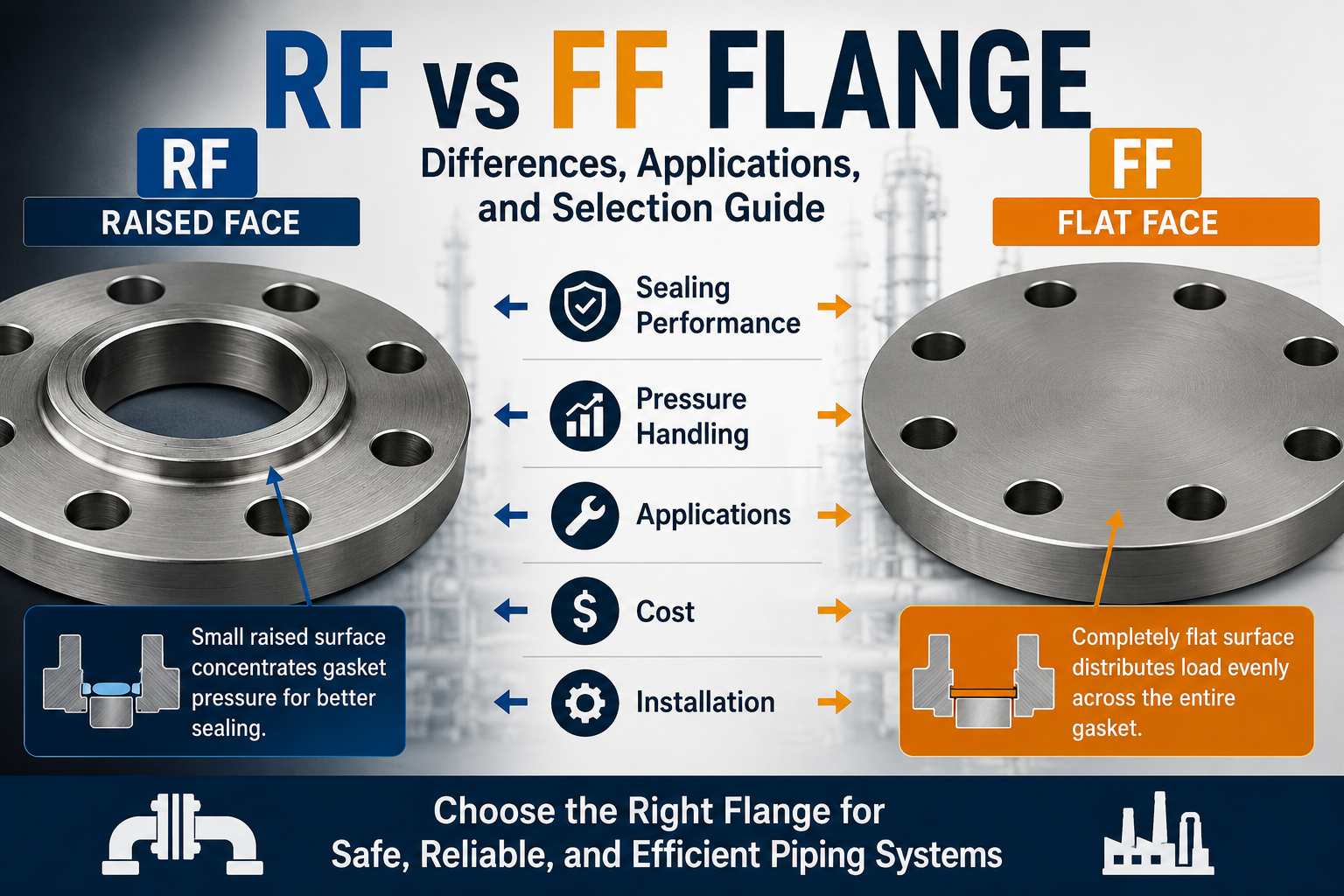
Raised Face (RF) and Flat Face (FF) flanges are two common flange types used in piping systems. Understanding their differences is essential for proper selection, sealing performance, and safe operation in industrial plants.
What Is an RF Flange
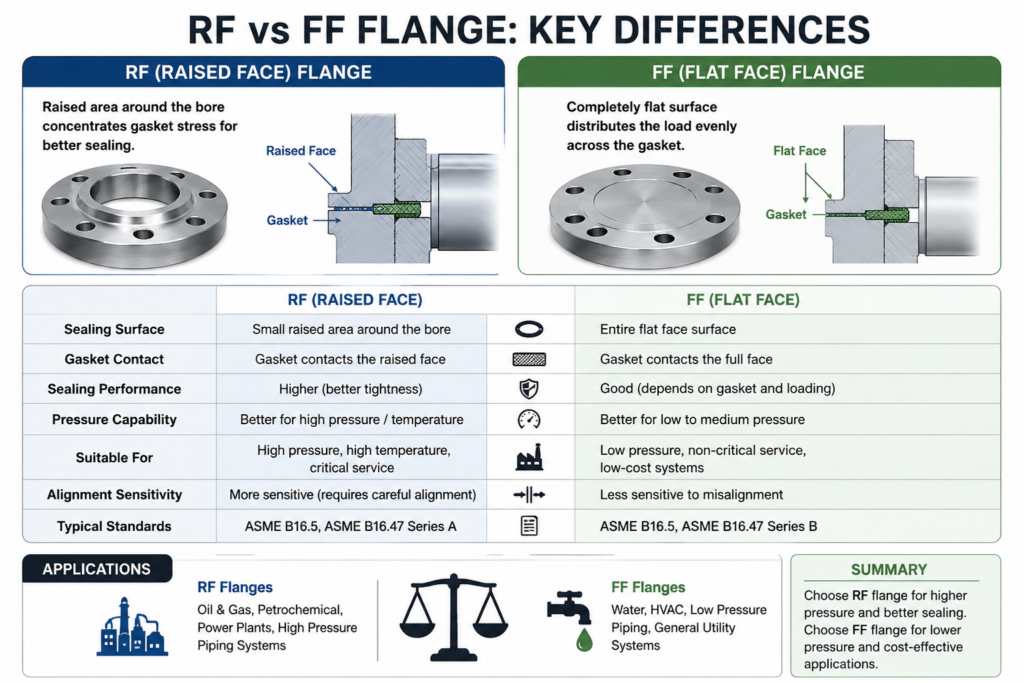
An RF (Raised Face) flange has a small raised surface around the bore where the gasket is placed. This raised area concentrates the sealing pressure and improves tightness.
What Is an FF Flange
An FF (Flat Face) flange has a completely flat surface. The gasket covers the entire face of the flange, distributing the load evenly.
Key Differences Between RF and FF
Sealing Surface
- RF: Raised sealing surface
- FF: Entire flat surface used for sealing
Gasket Type
- RF: Ring-type gasket (smaller diameter)
- FF: Full-face gasket
Load Distribution
- RF: Concentrated load on raised face
- FF: Even load distribution across the flange face
Pressure Capability
- RF: Suitable for higher pressure systems
- FF: Used in low-pressure applications
Why Mixing RF and FF Is Dangerous
Connecting an RF flange to an FF flange can cause uneven stress. The raised face may damage the flat flange, especially if it is made of cast iron, leading to cracking or leakage.
Applications
RF Flange Applications
- Oil and gas pipelines
- High-pressure steam systems
- Chemical plants
FF Flange Applications
- Water systems
- Low-pressure piping
- Cast iron equipment connections
Material Considerations
- RF flanges are commonly used with steel piping systems
- FF flanges are often used with cast iron or FRP equipment
Selection Guidelines
When choosing between RF and FF:
- Use RF for high pressure and tight sealing requirements
- Use FF for low pressure and brittle materials
- Avoid mixing RF and FF unless proper spacer or design is used
Conclusion
RF and FF flanges differ in sealing surface design, pressure capability, and applications. Proper selection ensures leak prevention and long-term reliability in piping systems.