Short Answer
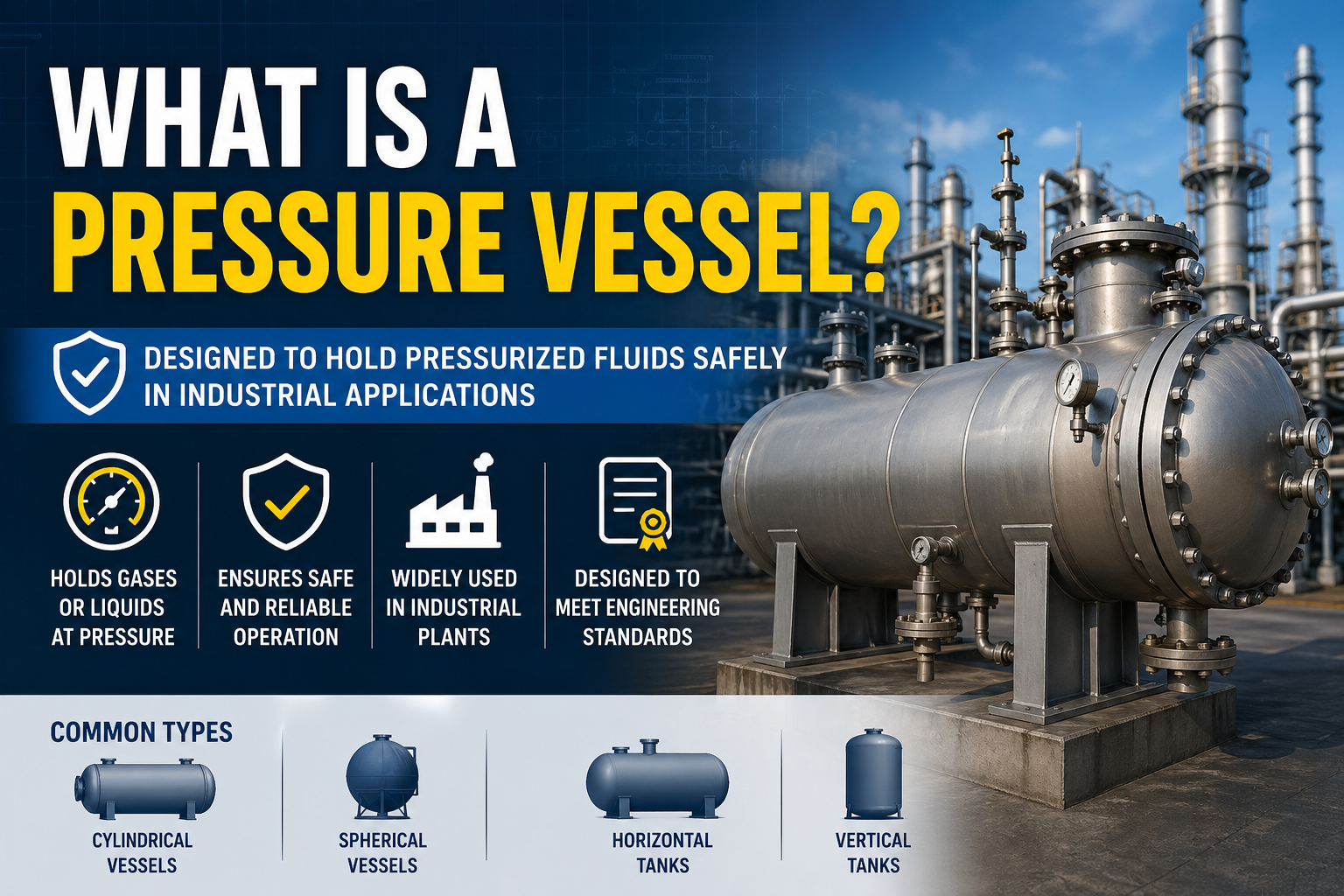
A pressure vessel is a container designed to hold gases or liquids at a pressure different from the surrounding atmosphere. It is commonly used in industrial plants to store, process, or transport pressurized fluids safely.
Explanation
Pressure vessels are widely used in industries such as chemical plants, power plants, oil and gas facilities, and refineries. These vessels are specifically designed to withstand internal pressure and maintain structural integrity during operation.
Unlike ordinary tanks, pressure vessels must be carefully engineered to handle stresses caused by internal pressure, temperature changes, and mechanical loads. Because of these conditions, pressure vessels are typically designed according to strict engineering standards and codes.
Common shapes of pressure vessels include cylindrical vessels, spherical vessels, and horizontal or vertical tanks designed for pressurized service.
Common Applications
Pressure vessels are used in many industrial processes, including:
- Steam boilers
- Air receivers
- Chemical reactors
- Heat exchangers
- Gas storage vessels
These vessels allow processes to operate safely under controlled pressure conditions.
Engineering Practice
In plant engineering, pressure vessels must be designed and manufactured according to recognized engineering standards. These standards define requirements for material selection, wall thickness, welding, and inspection.
Two well-known standards used for pressure vessel design are:
- American Society of Mechanical Engineers pressure vessel codes
- American Petroleum Institute standards for storage tanks and related equipment
Following these standards helps ensure safety, reliability, and compliance with industry regulations.
Summary
A pressure vessel is a specially designed container used to store or process fluids under pressure. Because of the potential hazards associated with pressurized systems, pressure vessels must be carefully designed, manufactured, and inspected according to strict engineering standards.


コメント